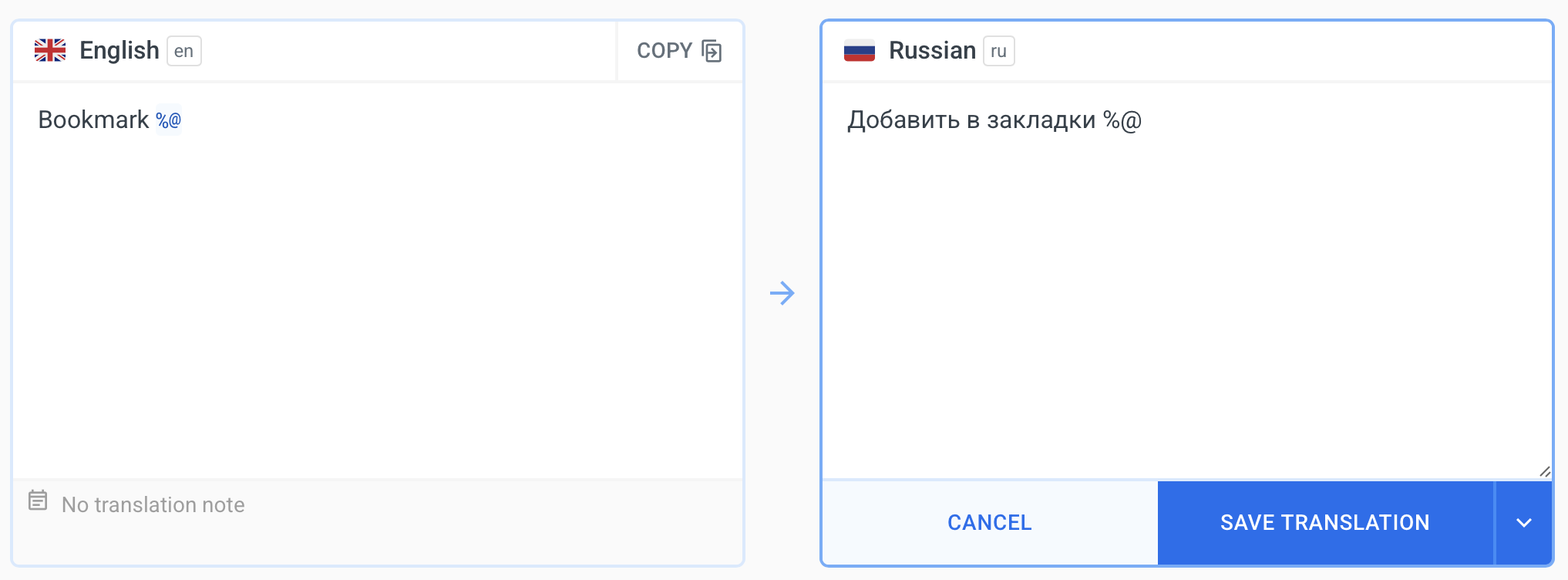
Issue Description
The Orion RC browser currently has incorrect grammatical number agreement in its Slavic language translations, particularly those using Cyrillic script. Slavic languages change their noun endings based on the preceding number, following complex systems of grammatical rules called "падежи" (cases). The current implementation appears to be using incorrect noun forms after numbers.
https://localazy.com/p/orion-browser/phrases/1105/edit/_a8023463571882447676
Specific Examples from Screenshots
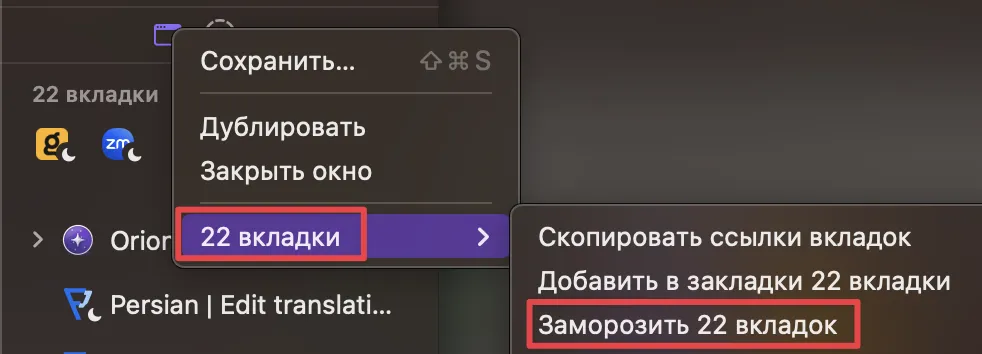
- In Image 1, we see "22 вкладки" being used, but the action menu shows "Заморозить 22 вкладок" which is grammatically incorrect.
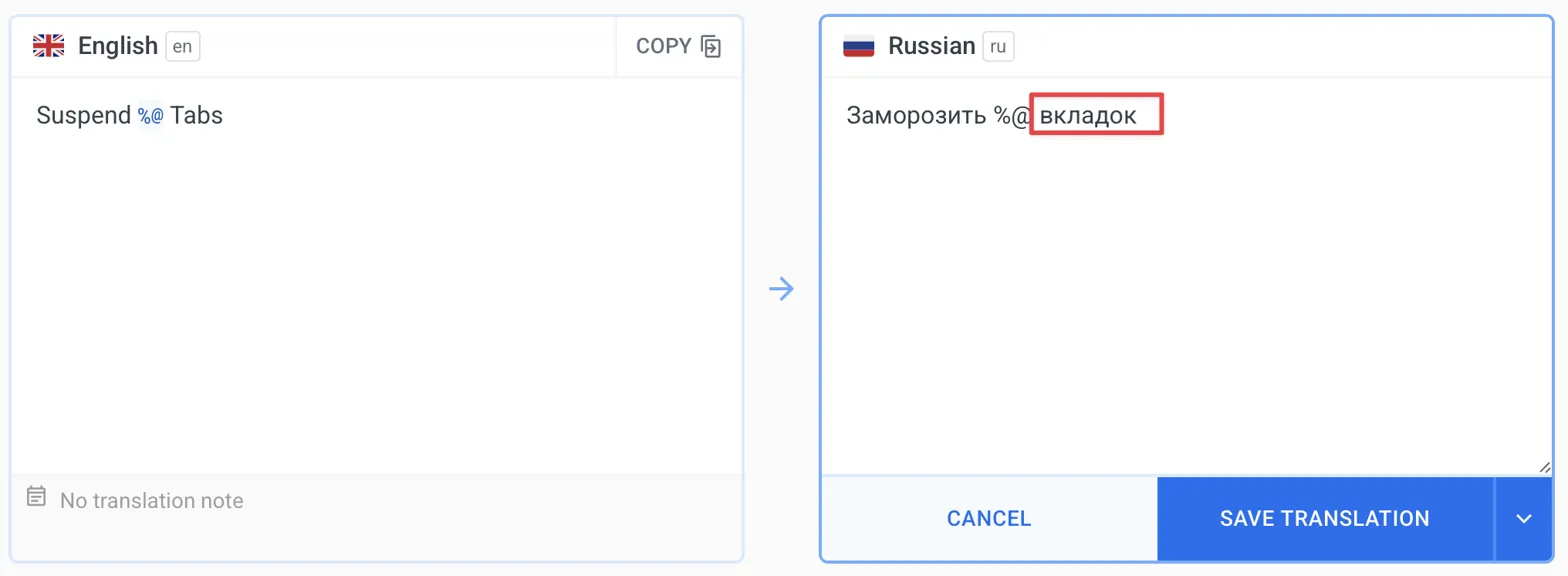
- In Image 2, the translation for "Suspend Tabs" is shown as "Заморозить %@ вкладок" which uses the genitive plural form regardless of the number.
Technical Background
In many Slavic languages with Cyrillic script:
- After numbers ending in 1 (except 11): use nominative singular (вкладка)
- After numbers ending in 2-4 (except 12-14): use genitive singular (вкладки)
- After numbers ending in 5-9, 0, and 11-19: use genitive plural (вкладок)
Proposed Solution
Implement a proper plural forms handler for Slavic languages using Cyrillic script that follows these rules:
For strings containing number placeholders (%@, %d), create conditional logic:
- If number % 10 == 1 && number % 100 != 11: use "вкладку" (accusative singular)
- If (number % 10 >= 2 && number % 10 <= 4) && (number % 100 < 10 || number % 100 >= 20): use "вкладки" (accusative plural)
- Otherwise: use "вкладок" (genitive plural)
Examples of correct forms:
- "Закрыть 1 вкладку"
- "Закрыть 21 вкладку"
- "Закрыть 2/3/4/22/23/24 вкладки"
- "Закрыть 5/6/.../20/25/... вкладок"
Implementation Recommendations
- Use a localization system that supports plural rules (like ICU MessageFormat)
- Create separate translation strings for each grammatical case
- Implement a helper function that selects the appropriate form based on the number
Benefits
- Improved user experience for speakers of Slavic languages using Cyrillic script
- Professional appearance of the interface
- Proper linguistic accuracy that respects the grammatical rules of these languages
Additional Context
This issue is common in software localization to Slavic languages. The same approach would benefit all Slavic languages that have similar grammatical number rules, particularly those using Cyrillic script (Russian, Ukrainian, Bulgarian, Serbian, etc.).